














Improve Teamwork in Healthcare Environments
Learn how healthcare settings designed to enable communication can improve clinician teamwork—and save lives.
Design Strategies for Improving Clinician Teamwork

1. Include a Variety of Settings
From confidential discussions to full-team updates to casual conversations, nurses, doctors, and other team members convey important information to one another in many different ways over the course of a shift. Whatever the interaction, including a variety of settings across the care team environment enables a diversity of communication styles—and increases worker satisfaction by 31.8 percent.(4)

2. Increase Conversational Transparency
Giving clinicians visual and auditory access across the team environment—the ability to see, hear, and even overhear each other—helps them engage in critical types of communication, such as intervening to correct a mistake or offering assistance to solve a problem. Care teams with visual and auditory access are more likely to offer support to their peers, share knowledge informally in conversation, provide feedback, and trust their teammates.(5)

3. Facilitate Chance Encounters
Important communication doesn't just happen in meetings. Nurses and doctors will tell you that some of the most valuable exchanges (e.g., critical patient updates, new test results) can occur while simply passing a teammate in the hallway. In fact, one study revealed that a startling 56 percent of all staff interactions are unplanned. Design must make room for these chance encounters and casual conversations in corridors and other shared spaces.(6)

4. Plan for Human-Scaled Work Areas
It's difficult to give care teams the right amount of space. But human-scaled environments that put staff in relatively close proximity to one another can help them be more efficient, increase informal learning through unplanned conversations, and even reduce the feeling that they're wasting time.(7)
5. Create Neutral Zones
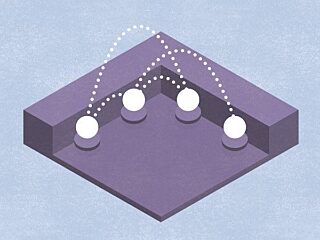
The era of closed-door private offices is fading fast. And for good reason. Research shows that, when people from different disciplines work side by side, communication and team cohesiveness improve across the board. It also helps break down perceived hierarchies between groups and functions, enabling cross-functional engagement and knowledge-sharing. Nurses, doctors, and specialists who work together in the same space feel more comfortable sharing their opinions with each other—or starting a potentially life-saving conversation.(8)
Want to learn more?
Request to connect with a healthcare specialist.